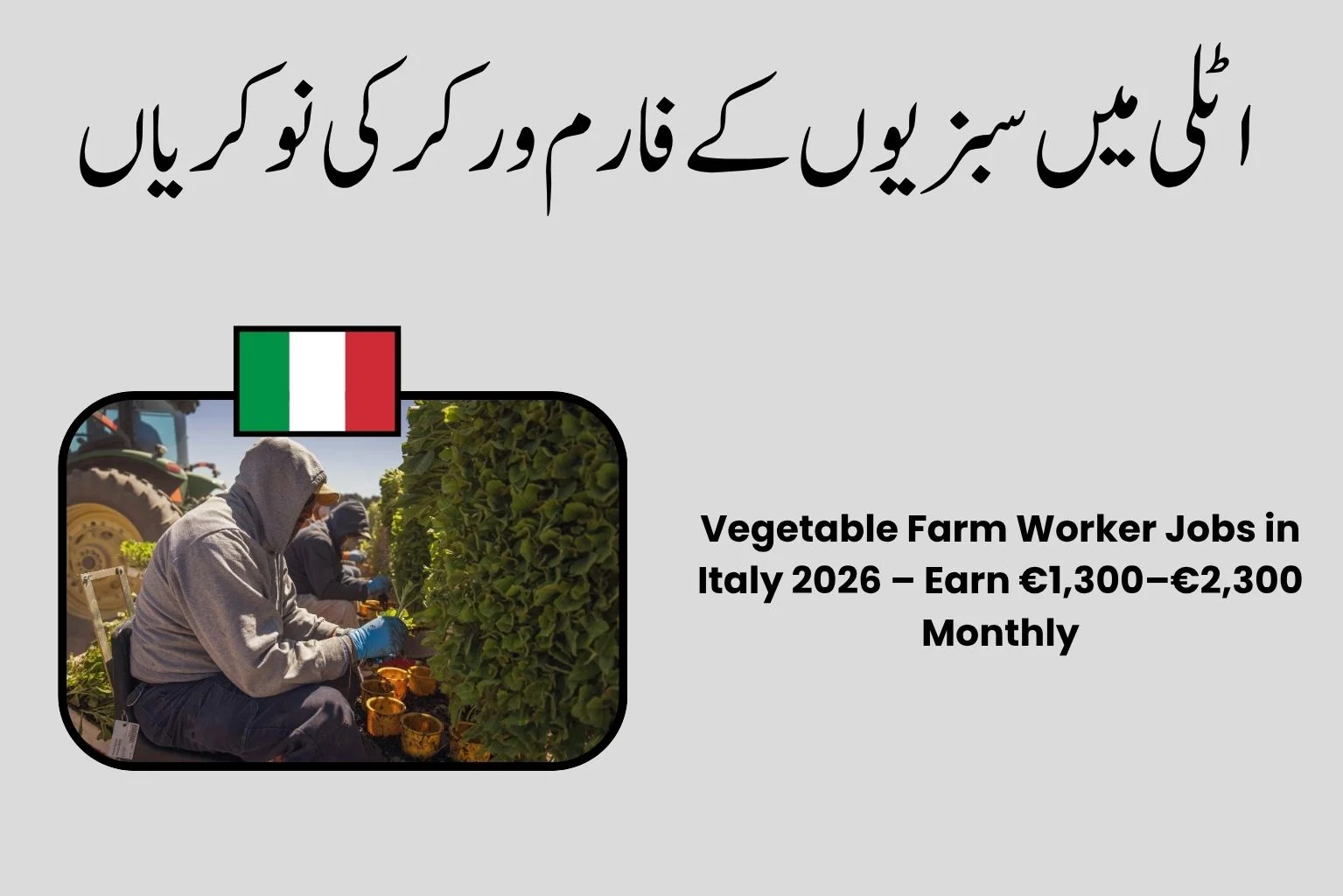
Italy is one of Europe’s leading agricultural producers, making vegetable farming an important part of its economy. Every year, farms across regions such as Lazio, Emilia-Romagna, Veneto, Puglia, Sicily, and Tuscany hire thousands of vegetable farm workers to help with planting, cultivating, harvesting, sorting, and packing fresh produce.
In 2026, demand for vegetable farm workers remains strong due to seasonal harvests and labor shortages. Many employers recruit both local and international workers, and some may sponsor eligible foreign workers through Italy’s legal seasonal work permit system, subject to government quotas and employer approval. Italy’s Decreto Flussi program continues to provide legal pathways for seasonal agricultural employment.
Whether you’re an experienced farm worker or looking for an entry-level opportunity abroad, vegetable farm jobs in Italy can provide stable income, valuable international work experience, and opportunities for long-term employment.
Why Choose Vegetable Farm Worker Jobs in Italy?
Working on Italian vegetable farms offers numerous benefits.
Benefits
- Monthly salary between €1,300 and €2,300
- Overtime opportunities during harvest seasons
- Entry-level positions available
- On-the-job training
- Paid annual leave (where applicable)
- Social security benefits
- Health insurance contributions
- Accommodation provided by some employers
- Opportunity to work legally under Italy’s seasonal worker program
- Career growth into team leader or farm supervisor roles
Average Salary
Salary depends on experience, employer, location, and season.
| Position | Monthly Salary |
|---|---|
| Vegetable Farm Worker | €1,300–€1,700 |
| Greenhouse Worker | €1,400–€2,000 |
| Harvest Worker | €1,300–€1,900 |
| Packing Worker | €1,350–€1,900 |
| Irrigation Assistant | €1,400–€2,000 |
| Farm Equipment Operator | €1,700–€2,300 |
| Farm Supervisor | €2,200–€3,200 |
Hourly wages typically range from €9 to €14, with overtime available during peak harvest periods.
Types of Vegetable Farm Jobs
1. Vegetable Picker
Harvest vegetables such as tomatoes, lettuce, peppers, cucumbers, onions, and cabbage.
Salary: €1,300–€1,700/month
2. Greenhouse Worker
Maintain vegetables grown in greenhouses by watering, pruning, fertilizing, and harvesting crops.
Salary: €1,400–€2,000/month
3. Packing and Sorting Worker
Inspect, sort, clean, and package vegetables for supermarkets and export.
Salary: €1,350–€1,900/month
4. Irrigation Worker
Operate irrigation systems and monitor water supply for crops.
Salary: €1,400–€2,000/month
5. Farm Equipment Operator
Operate tractors and agricultural machinery used in vegetable farming.
Salary: €1,700–€2,300/month
Job Responsibilities
Vegetable farm workers typically perform duties such as:
- Planting seeds and seedlings
- Watering crops
- Applying fertilizers
- Harvesting vegetables
- Sorting and grading produce
- Packing vegetables for shipment
- Loading and unloading produce
- Cleaning work areas
- Maintaining farming tools
- Following workplace health and safety procedures
Common Vegetables Grown in Italy
Workers may help cultivate:
- Tomatoes
- Lettuce
- Spinach
- Cucumbers
- Peppers
- Zucchini
- Eggplant
- Carrots
- Potatoes
- Onions
- Broccoli
- Cauliflower
Eligibility Requirements
Most employers require applicants to:
- Be at least 18 years old
- Hold a valid passport
- Be physically fit
- Be willing to work outdoors
- Work flexible hours when required
- Have basic English or Italian communication skills
- Follow workplace safety rules
Previous farming experience is preferred but often not mandatory.
Skills That Improve Your Chances
Employers value candidates with:
- Physical stamina
- Teamwork
- Time management
- Reliability
- Harvesting experience
- Greenhouse experience
- Packing and sorting skills
- Basic machinery knowledge
- Attention to detail
Documents Required
Prepare these documents before applying:
- Updated CV or Resume
- Valid passport
- Passport-sized photographs
- Educational certificates (if available)
- Experience certificates
- Reference letters
- Police clearance certificate (if requested)
- Medical certificate
Visa Requirements
Non-EU and non-EEA citizens generally need a work visa before working in Italy.
The typical process includes:
- Receive a job offer from an Italian employer.
- The employer applies for authorization to hire a foreign worker.
- Apply for the appropriate work visa through the Italian embassy or consulate.
- Travel to Italy after visa approval.
- Apply for a residence permit after arrival if required.
Seasonal agricultural workers may qualify through Italy’s Decreto Flussi seasonal work permit program, depending on annual quotas and employer eligibility.
How to Apply for Vegetable Farm Worker Jobs
Step 1
Prepare a professional CV highlighting:
- Farm experience
- Physical work experience
- Language skills
- Availability
Step 2
Register on trusted job portals.
Recommended websites include:
- EURES: https://europa.eu/eures/portal/jv-se/home?lang=en
- Indeed Italy: https://it.indeed.com
- LinkedIn Jobs: https://www.linkedin.com/jobs
- InfoJobs Italia: https://www.infojobs.it
- Jobrapido Italy: https://it.jobrapido.com
Step 3
Search using keywords such as:
- Vegetable Farm Worker Italy
- Farm Jobs Italy
- Agricultural Worker Italy
- Greenhouse Jobs Italy
- Harvest Worker Italy
- Seasonal Farm Jobs Italy
Step 4
Submit your CV and cover letter.
Step 5
Attend interviews if shortlisted.
Step 6
Complete visa processing if sponsorship is offered.
Best Regions for Vegetable Farm Jobs
| Region | Major Crops |
|---|---|
| Lazio | Tomatoes, Lettuce |
| Emilia-Romagna | Tomatoes, Onions |
| Veneto | Vegetables, Greenhouse Crops |
| Puglia | Tomatoes, Peppers |
| Sicily | Cucumbers, Eggplant |
| Tuscany | Mixed Vegetables |
| Campania | Tomatoes, Leafy Greens |
| Lombardy | Greenhouse Vegetables |
Employee Benefits
Many employers may provide:
- Competitive salary
- Overtime pay
- Paid leave
- Social security contributions
- Health insurance
- Safety equipment
- Training
- Free or subsidized accommodation (with some employers)
- Transportation assistance (varies by employer)
Benefits depend on the employment contract.
Tips to Improve Your Hiring Chances
- Apply before the planting and harvesting seasons.
- Keep your CV updated.
- Learn basic Italian phrases.
- Highlight any farming or outdoor work experience.
- Apply to multiple employers.
- Be flexible with work locations and schedules.
- Follow up after submitting applications.
Frequently Asked Questions (FAQ)
1. Can foreigners apply for vegetable farm worker jobs in Italy?
Yes. Foreign workers can apply when an employer is authorized to recruit under Italy’s legal work permit system, including seasonal agricultural programs.
2. Is previous farming experience required?
No. Many employers hire entry-level workers and provide on-the-job training, although previous experience is an advantage.
3. How much can vegetable farm workers earn?
Most workers earn between €1,300 and €2,300 per month, depending on experience, overtime, employer, and location.
4. Is accommodation provided?
Some employers provide free or subsidized accommodation for seasonal workers, while others may offer accommodation assistance. This varies by employer.
5. Is Italian language knowledge required?
Basic Italian is helpful, but some employers also hire workers with basic English, especially in larger agricultural operations.
6. Where can I find genuine vegetable farm jobs?
The most reliable sources include the EURES job portal, Indeed Italy, LinkedIn Jobs, InfoJobs Italia, and official employer career pages. EURES regularly lists agricultural vacancies across Italy.
Conclusion
Vegetable Farm Worker Jobs in Italy provide an excellent opportunity for individuals seeking legal employment in one of Europe’s strongest agricultural sectors. With competitive salaries, seasonal and permanent vacancies, opportunities for overtime, and the possibility of employer-supported work permits through Italy’s seasonal worker system, these roles are ideal for both experienced agricultural workers and newcomers.
Prepare a professional CV, apply through trusted recruitment platforms, and submit your applications early to maximize your chances of securing a vegetable farm worker job in Italy in 2026.
